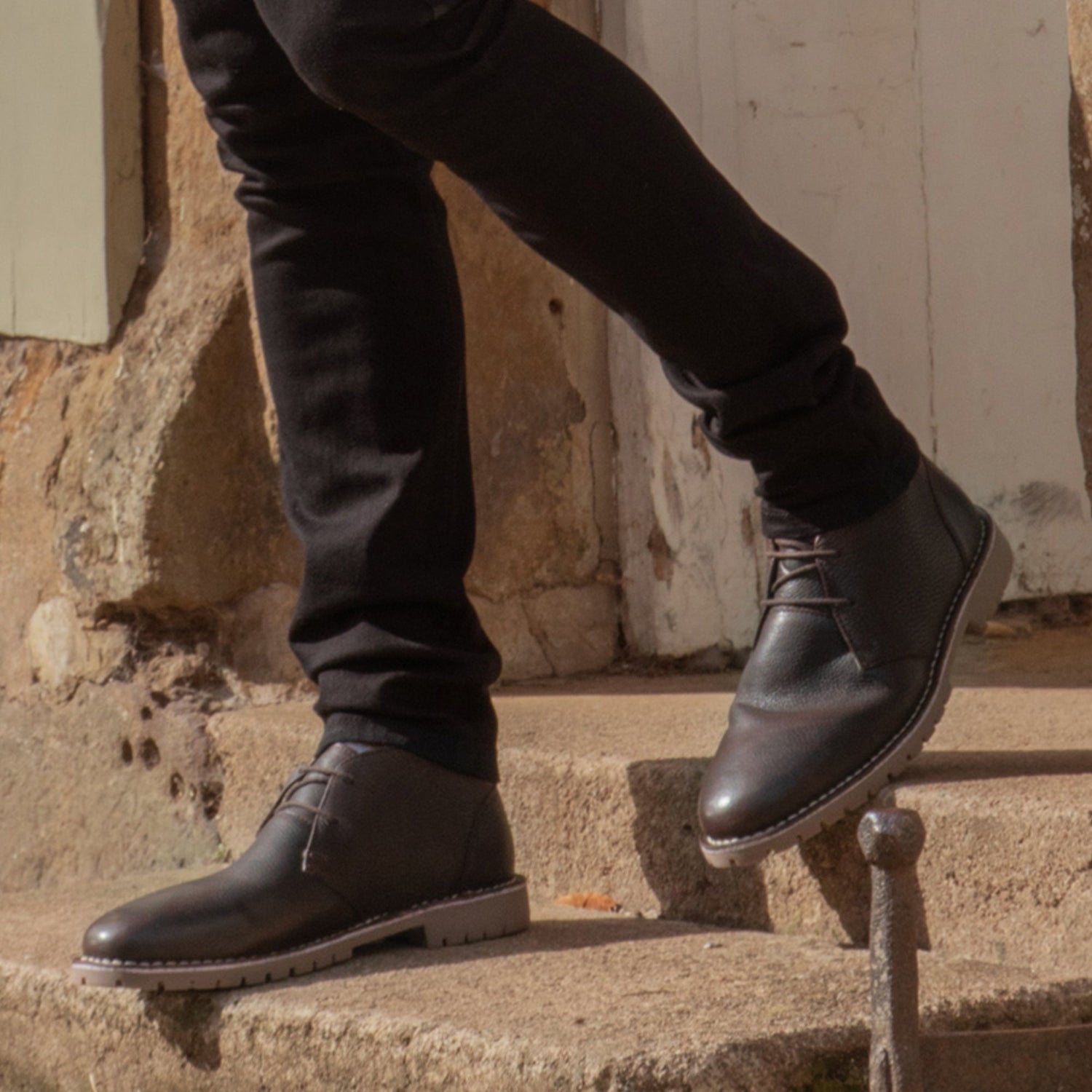


Suede Boots Care Guide: Protect Your Favourite Footwear
Share
Suede boots possess an unmatched, earthy character, a tactile appeal that smooth leather can’t replicate. Yet, many shy away, fearing their supposed fragility. This comprehensive suede boots care guide is here to dispel that myth, proving that with the right knowledge, your favourite suede boots, like our classic popps, can withstand the rigours of daily life and develop a rich patina that only gets better with age.
The Essential Toolkit: Preparing for Suede Maintenance
Before you can begin to protect and restore your suede boots, you must assemble a small but crucial arsenal of tools. Think of this not as an expense, but as an investment in the longevity and appearance of your footwear. Proper care begins with proper preparation, and having these items on hand means you can act swiftly to deal with everyday dust or an unexpected mishap. The goal is to preserve the unique, velvety texture—known as the ‘nap’—that makes suede so desirable, and these tools are designed specifically for that purpose.
The cornerstone of any suede care kit is a dedicated suede brush. These are not just any old brushes; they are purpose-built implements. Typically, they feature two or more sides: one with soft nylon or brass bristles for gently lifting away surface-level dirt and reviving the nap, and another with a rubber or crepe surface designed to tackle more stubborn scuffs and shiny spots. The bristles work to get into the fine texture of the suede without being abrasive, while the rubber side acts almost like a pencil eraser, gripping and pulling out ground-in grime. Regular use of this tool after wearing your boots will do more to keep them looking fresh than any other single action.
Next in your toolkit should be a high-quality suede protector spray. This is your first line of defence, a veritable invisible shield for your boots. These sprays work by creating a hydrophobic barrier on the surface of the suede, causing water and other liquids to bead up and roll off rather than soaking in and staining. It’s essential to choose a spray specifically formulated for suede and nubuck, as other types of waterproofing products can contain silicones or waxes that will mat the nap and permanently alter the colour and texture of your boots. Protecting your footwear from the outset is far easier than trying to reverse damage later on.
Finally, a suede eraser or cleaning block is an invaluable asset for targeted treatments. While the rubber part of your brush is good for general scuffs, a dedicated eraser block is excellent for dealing with small, precise marks and stains. It works through gentle friction, crumbling as it lifts the stain away from the suede fibres. It's particularly effective on minor blemishes and dark marks that can appear on both men's styles and women's. Having these three core items—a brush, a protector spray, and an eraser—will equip you to handle the vast majority of suede care situations with confidence.
Proactive Protection: The First Line of Defence Against the Elements
The single most important moment in the life of your suede boots is before you’ve even worn them out of the house. Applying a protective treatment to brand-new boots is a non-negotiable step that sets the foundation for years of durable wear. Suede, in its natural state, is a porous material. The fibres that create its signature soft nap are absorbent, making them susceptible to water damage, dirt, and stains. A protector spray effectively seals these fibres without compromising their texture or breathability, creating a barrier that repels moisture and prevents dirt from becoming deeply ingrained.
Applying the protector spray correctly is crucial for achieving an even and effective coating. First, ensure your boots are clean and completely dry. If they are brand new, a quick brush will remove any dust from the box. Work in a well-ventilated area, preferably outdoors. Hold the can approximately 20-30 centimetres away from the boot and apply a light, even mist across the entire surface. The key is to avoid saturating any one area. A common mistake is to spray too closely, which can lead to dark spots and an uneven finish. It is far better to apply two light coats than one heavy one.
After applying the first coat, you must allow the boots to dry naturally and completely. This can take several hours, or even overnight, depending on the humidity. Do not be tempted to speed up the process by placing them near a radiator, fire, or using a hairdryer, as direct heat can dry out the suede, making it stiff and brittle, and can even cause the colour to warp. Once the first coat is fully dry to the touch, you can apply a second light coat for maximum protection. This initial treatment prepares your boots for their first encounter with the unpredictable British weather.
This protective shield is not permanent and will need to be reapplied periodically. The frequency depends entirely on how often you wear your boots and the conditions you wear them in. As a general rule of thumb, it’s a good practice to re-spray your boots every couple of months during seasons of heavy wear. For our elegant women's styles that might be worn less frequently, re-treating them at the beginning of each autumn and spring season is a sound strategy. A quick test is to drop a tiny amount of water on an inconspicuous area; if it beads up and rolls off, your protection is holding. If it starts to darken the suede and soak in, it’s time for a top-up.
A Comprehensive Suede Boots Care Guide for Routine Cleaning and Scuffs
Consistent, gentle maintenance is the secret to keeping suede looking its best. Rather than waiting for your boots to become visibly soiled, incorporating a few simple steps into your routine will prevent dirt from accumulating and keep the nap looking plush and uniform. The most basic and effective habit to cultivate is giving your boots a quick brush after every few wears. This simple act, taking no more than a minute, lifts surface dust and dirt before it has a chance to settle deep into the fibres, ensuring your boots always look sharp and ready for the next adventure.
The technique for this routine brushing is important. Using your specialist suede brush, start by brushing the entire surface of the boot very gently in a single, consistent direction. This will help to lift away any loose particles and clean the surface. Following this, you can then brush with slightly more vigorous, back-and-forth motions. This technique is specifically for reviving the nap—those fine, raised fibres that give suede its characteristic velvety feel. Over time and with wear, the nap can become flattened or matted, and this brushing action helps to lift the fibres back up, restoring their original texture and colour depth.
For small, dry marks or scuffs that brushing alone won’t shift, turn to your suede eraser. Use it much like a pencil eraser, applying gentle to moderate pressure directly onto the mark in a circular motion. You will notice the block may crumble slightly; this is normal, as it’s the friction and the crumbling particles that work together to lift the stain from the suede. Once the mark has faded, simply use your suede brush to sweep away the eraser residue and blend the texture of the treated area with the surrounding suede. This method is perfect for the kind of minor blemishes that our hard-wearing roamers might pick up on a country walk.
Inevitably, you will get caught in a downpour. The key is not to panic. The first rule is never to rub wet suede, as this will only push the water deeper into the material and can damage the delicate nap. Instead, use a clean, dry cloth or a paper towel to gently blot the surface and absorb as much excess moisture as possible. Afterwards, stuff the boots with balled-up newspaper or, even better, insert cedar shoe trees. This will help them hold their shape and draw moisture out from the inside. Let them air dry naturally for at least 24 hours, well away from any direct heat sources. Once completely dry, the nap will likely be stiff and flat; a thorough brushing will be needed to restore it to its former glory.
Tackling Tough Stains: Advanced Suede Rescue Techniques
Even with the most diligent protection and routine care, accidents happen. A splash of wine, a drop of oil from a pasty, or a stubborn mud patch can feel like a disaster for your suede boots. The most critical piece of advice for dealing with any serious stain is to act as quickly as possible. The longer a substance is allowed to sit on the suede, the deeper it will penetrate the fibres, making it exponentially more difficult to remove. Having the right knowledge for these specific situations can be the difference between a minor inconvenience and a permanent mark.
One of the most common and feared blemishes is the dreaded water stain. It often appears as a distinct, dark ring or ‘tideline’ after a spot on the boot gets wet and dries unevenly. The solution, while sounding counter-intuitive, is to treat the entire boot with water. Take a clean sponge or cloth, dampen it slightly, and gently wipe the entire outer surface of the boot. The goal is to create an even, all-over dampness with no dry patches. This ensures that the boot will dry uniformly, eliminating the original water line. Blot away excess water, stuff the boots to hold their shape, and allow them to air dry completely before brushing the nap back to life.
For oily or greasy stains, you must turn to an absorbent powder. Cornflour or talcum powder are excellent and readily available options. As soon as you notice the stain, blot away any excess oil with a clean cloth, being careful not to spread it. Then, generously apply the powder directly onto the stain, creating a small mound. Do not rub it in. Let the powder sit for several hours, or preferably overnight. It will work to draw the grease out of the suede fibres. The next day, gently tip the powder off and use your suede brush to clean the area. For stubborn stains, you may need to repeat the process. This technique works wonders on many of the all products in our suede collection.
Mud is another common foe, particularly in the British countryside. The absolute most important rule is to resist the urge to wipe away wet mud. Wiping will only smear the dirt and grind it into the suede’s delicate nap. Instead, you must be patient and let the mud dry completely, no matter how caked-on it is. Once it’s hard and brittle, you can use your hands or a blunt object to gently crack off the larger chunks. The remaining dried dirt can then be thoroughly brushed away with your suede brush. For any lingering discolouration, a specialist suede shampoo or cleaner, used according to the manufacturer’s instructions, may be necessary for a final deep clean.
Long-Term Storage and Seasonal Care
Proper storage is a frequently overlooked aspect of footwear care, but it is vital for preserving the condition of your suede boots during periods when they are not in regular use. Simply tossing them into the bottom of a wardrobe at the end of a season is a recipe for disaster, potentially leading to a loss of shape, dust accumulation, and even mildew if stored in a damp environment. Taking a few extra minutes to prepare your boots for storage ensures they will emerge looking just as good as when you put them away, ready for the next season of wear.
The first step before storing any footwear is to clean it thoroughly. Follow the routine cleaning steps outlined earlier: use your suede brush to remove all traces of dust and dirt, and treat any specific spots or scuffs with your eraser. Storing dirty boots allows grime to set in, making it much harder to remove later. It can also attract pests. Once the boots are perfectly clean and completely dry, the next step is to provide internal support. The best tool for this is a pair of unfinished cedar shoe trees. They perform two critical functions: they help the boot maintain its natural shape, preventing creases and collapse, and the natural cedar wood absorbs any residual moisture and imparts a fresh, pleasant scent.
The environment where you store your boots is just as important as the preparation. The ideal location is cool, dry, and dark, as direct sunlight can cause the rich colour of the suede to fade unevenly over time. To protect them from dust, place them in a breathable storage bag, such as one made from cotton or canvas. It is crucial to avoid plastic bags or boxes. Plastic is not breathable and can trap moisture, which is the perfect environment for mould and mildew to grow, potentially ruining your boots permanently. A simple fabric shoe bag allows air to circulate while keeping dust at bay.
When you retrieve your boots after several months in storage, they may need a little attention to bring them back to life. Give them a good brush to refresh the nap, which may have become slightly flattened. Check the suede’s condition; if it feels unusually dry or stiff, you might consider using a specialist suede conditioning spray. Unlike leather conditioners, these are very light formulations designed to nourish the hide without matting the nap. Ensuring they are stored in the correct shape is paramount, and you can always reference our popps size guide to be reminded of the perfect form your boots should hold.
Suede is not a delicate flower to be kept locked away; it is a rugged, characterful material meant to be worn and enjoyed. By following the steps in this suede boots care guide—from proactive protection and routine brushing to confident stain removal and proper storage—you transform your boots from a fragile purchase into a durable, long-term investment. Armed with this knowledge, you can wear your favourite pair with confidence, knowing they are equipped to handle whatever life throws at them. If you need help with sizing for your next pair, our roamers size guide is an excellent resource to ensure a perfect fit from day one.